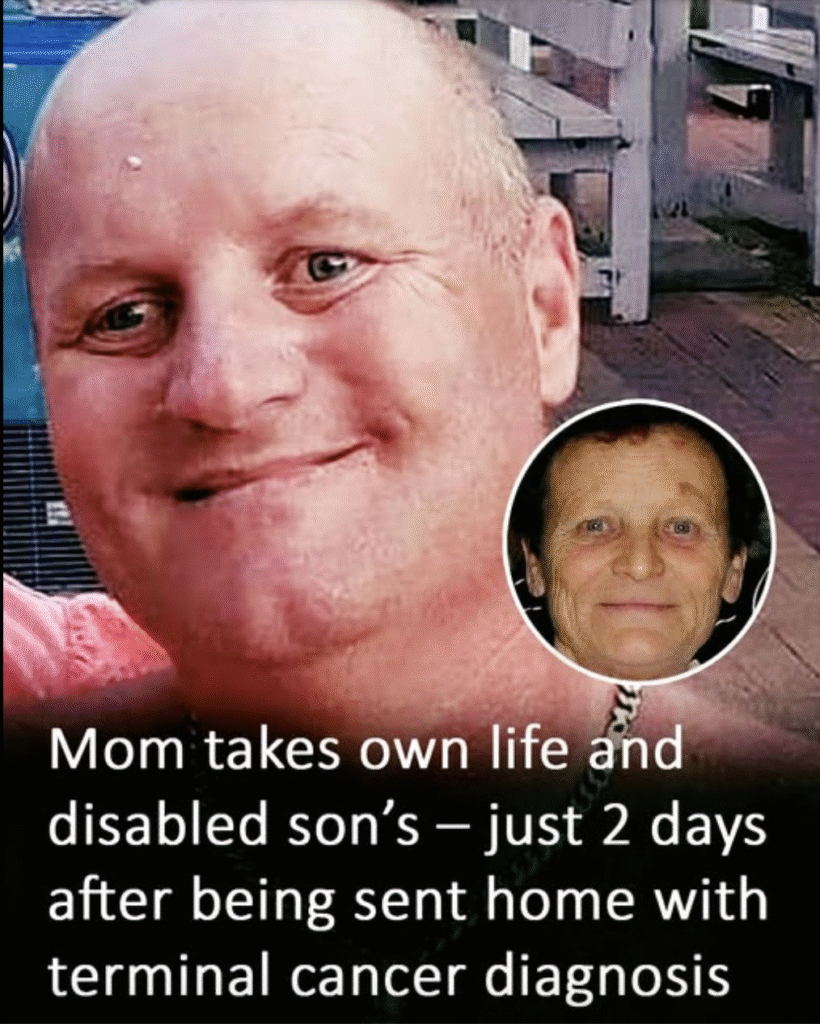

In 2021, Shirley Nunn, aged 67, and her son Steven, 50, were discovered deceased in their home located in Middlesborough, England. A recent investigation has uncovered heartbreaking details about this tragedy — a tragedy that could have been avoided.
In October 2021, Shirley Nunn was given a devastating diagnosis.
Doctors informed her that she had terminal cancer, and Shirley understood that it was only a matter of time before she would pass away. While this news was incredibly painful, what seemed to trouble her even more was the thought of how her son, Steven, would manage after she was gone.
Since Steven suffered a tragic accident at the age of 11, Shirley had been his full-time caregiver. The accident left him in a coma and caused significant brain damage. Despite many surgeries aimed at saving his life and aiding his recovery, Steven’s injuries had long-lasting effects, making it impossible for him to live independently.
Ste at the boro match with his carer he loved it xxx
Posted by Shirley Nunn on Wednesday, December 23, 2015
He was diagnosed with cerebral palsy and epilepsy, and faced challenges with learning, mobility, and emotional regulation.
Consequently, Shirley assumed the role of his full-time caregiver. After her husband passed away from cancer, she became Steven’s main support, with help from adult social care that had been involved in his care since 2005.
Stage three lung cancer
As mentioned earlier, Shirley was diagnosed with stage three lung cancer in 2021, and soon after, she received a terminal diagnosis when the cancer spread to her brain, spine, and pelvis.
Even with this heartbreaking diagnosis, Shirley kept caring for her dear son. The hospital and Shirley arranged for her to spend her final days at home, but she was determined to do everything possible for Steven. Yet, it was a tough battle for her, and a Domestic Homicide Review showed that Ms. Nunn was dealing with depression and had thoughts of ending her own life.
The report pointed out that the “loving and caring” Ms. Nunn was more concerned about how her son would manage without her than about her own declining health.
“She broke down in tears twice, thinking about how her situation was getting worse,” it stated.
Clothes fit lovely thanks chantelle and liam xx
Posted by Shirley Nunn on Monday, December 28, 2015
In October 2021, Ms. Nunn was hospitalized again due to her cancer issues.
The staff were told that palliative care was being set up for her at home and that she “preferred to die at home.”
Sadly, just two days after being sent home, police were called to her house by her sister, where both Shirley and Steven were found dead — exactly two years after her husband Paul also died from cancer.
The investigation into the tragic deaths showed that authorities overlooked crucial chances to help Shirley Nunn, and if she had received the proper support, this tragedy could have been prevented. It was evident that in the weeks before her death, Shirley was emotionally struggling and extremely vulnerable.
“Always prioritized his needs”
Because she didn’t receive the help she so urgently needed, it seemed like she felt compelled to take control of her son’s future herself.
“The seriousness of the cancer should have made sure that attention was given to [Ms. Nunn’s] mental and care situation as soon as possible, but the urgency of this was not completely recognized by the professionals. Her mental health should have been given as much importance as her physical health,” the report stated.
“[Ms. Nunn] had always cared for and loved her son throughout his life, and without a doubt, she had always put his needs first. We can only guess that she felt there were no other options or alternatives for [Steven’s] ongoing care and support, leading her to make the incredibly tough decision that resulted in their deaths.”
This heartbreaking story brings up uncomfortable but essential questions about how we support those who are facing unimaginable challenges.
Shirley Nunn’s steadfast love for her son led to a tragic choice, but was it the failure of the system that drove her to this point? Should we be doing more to offer mental health support for caregivers?
How much responsibility do we, as a society, have in making sure people like Shirley don’t feel like they have no other choice? Share your thoughts — could this tragedy have been avoided with the right care, or is there more we can do to assist families in need?